ChessBase Magazine
Larsen Opening with 3...d5 and 4...Nge7
Please, a pawn!
Petra Papp recommends 1.b3 e5 2.Bb2 Nc6 3.e3 d5 4.Bb5 Nge7!?
We start with the moves 1.b3 e5 2.Bb2 Nc6 3.e3 d5 4.Bb5 Nge7!?.
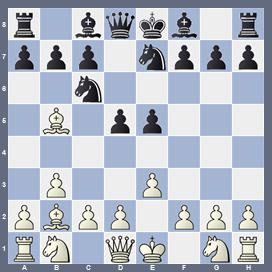
The Larsen Opening (1.b3) is a tricky one. White fianchettos their bishop right away to exert pressure on the a1-h8 diagonal, inviting Black to occupy the centre first. Hikaru Nakamura chose this approach in hundreds of his blitz games, and even Magnus Carlsen has played it several times in quick time control games. With 4.Bb5 White has pinned the c6 knight, threatening to capture the pawn on e5. Now the most common move is 4...Bd6, but I very much like 4...Nge7!? - Black overprotects the c6 knight, prevents destruction of their structure and offers an interesting pawn sacrifice!
In the above diagram, accepting the gift with 5.Bxe5 is the main line. Another frequent move is 5.Nf3 when I suggest 5...e4! -
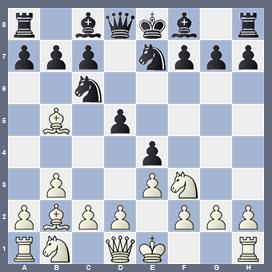
the most challenging approach, but it requires precise knowledge from both sides, as play becomes rather tactical! 6.Ne5 a6!? 7.Qh5 Be6!. Fortunately, this move safeguards everything. 8.Bxc6+ Nxc6 9.Nxc6 bxc6.
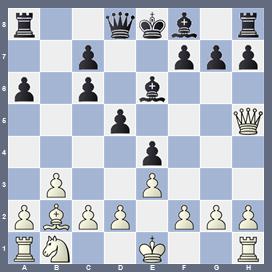
One of the main tabiyas in this line. The white bishop on b2 is strong. Black, in return, has the bishop pair, and normally wants to follow up with ...Bd6 (not fearing Bxg7), ...0-0 and f7-f6, see Kozionov,K - Jones,G 0-1.
5.Bxe5 is the main move, when 5...a6! forces White to part with their important light-squared bishop. 6.Bxc6+ Nxc6.
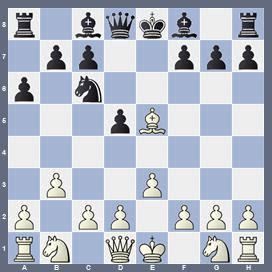
Now White has two retreats with the bishop: A) 7.Bb2 or B) 7.Bg3.
A) 7.Bb2
The most frequent move. Having played 1.b3, the b2 square looks 'more natural' for the bishop than g3. However, this is an inaccuracy, because now the light squares on the kingside can be attacked more easily by Black: 7...Qg5!.
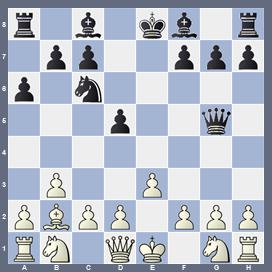
This is one of the main tabiyas. The weak g2 pawn is difficult to protect. There are many options for White, but each of them creates problems:
8.g3 significantly weakens the light squares.
8.Qf3 can be met by 8...Bg4 ( 8...Qg6 is also a fine option) 9.Qg3 Bd6 10.f4 Qf5!,
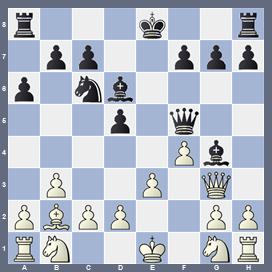
see the details in Corrales Jimenez,F - Droin,A 1-0.
8.Nf3 gives up the g2 pawn to free the white position. 8...Qxg2 9.Rg1 Qh3.
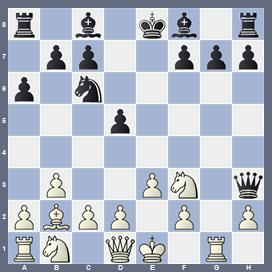
The knight on f3 is vulnerable now. Black threatens to play ...Bg4, and their queen on h3 is quite annoying (10.Rg3 Qh6!), see Tillyaev,U - Ter Sahakyan,S 0-1.
Lastly, the move 8.Kf1 gives up the right to castle, which is a favourite of Nakamura, who often plays it in blitz games. 8...Bg4!? 9.Nf3 Qh6!?.
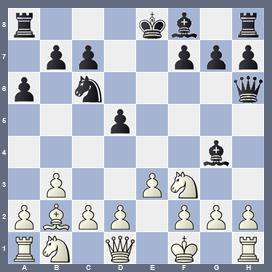
It is essential to understand why the queen moves to this specific square: Black wants to follow up with the pawn push f7-f5 and, in case of White's h3, reserves the option ...Bh5 maintaining the pin, see Poltorak,S - Aalto,P 0-1.
B) 7.Bg3
I believe this is a better position for the bishop. The g-file is blocked, making it difficult to attack the g2 pawn. However, now Black has a new strategy: the central push d5-d4. But first ... 7...h5!. Yes, that’s a strong move! We would like to play h5-h4. further cramping White's position. 8.h4.
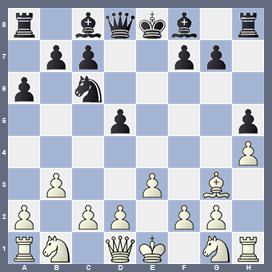
8...d4!. This move is both strong and necessary (otherwise White will play d2-d4). Black's pawn on d4 is quite annoying and hinders White's development. 9.Ne2 is logical enough, and now the strongest move is 9...Bd6!
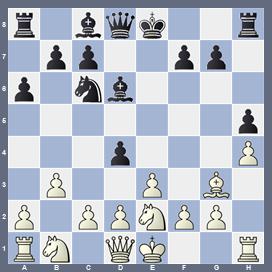
aiming to trade the dark-squared bishops, see (Jumabayev,R - Kruckenhauser,A 1/2), while the alternatives 9...Be7 and 9...Qf6 are examined in the high-class blitz game Praggnanandhaa,R - Firouzja,A 1-0.
Conclusion: There are many setups against the Larsen opening, but the pawn sacrifice 4...Nge7!? is particularly to my liking! It leads to complex and interesting play. I aimed to explore the critical lines in depth and, whenever possible, included several options, so you can choose the one that best fits your style. I hope you find many useful ideas in this article - and wish you good luck with 4...Nge7!? in your practice!